Jesus Now And Forever

Blog

God is Silent

When God is Silent: The Powerful Breakthrough Hidden in Your Deepest Disappointment

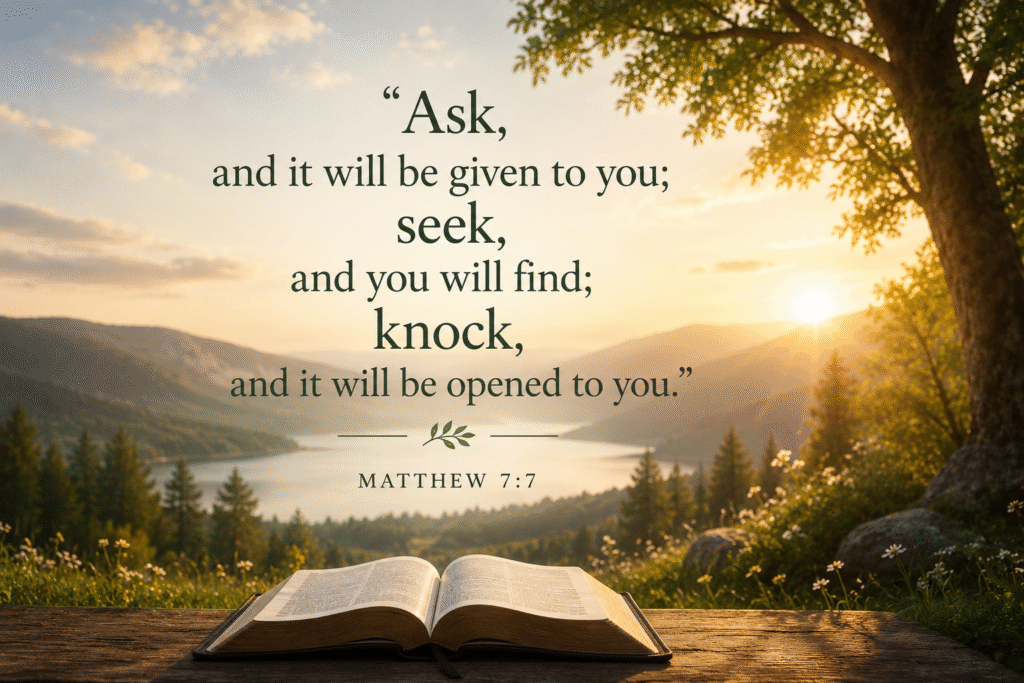
You prayed. You believed. You waited.  And then nothing… Just the presence of another ordinary morning till sunset, to say, “My day.” There was a wish, a prayer, I made, and it seemed to hit an invisible ceiling.  The moment you feel God is silent is often the very moment your prayer, your longing, is drawing nearer to its breakthrough. The silence of God does not signify the absence of His action.  It’s always the beginning of something amazing.  God is Silent The Silence That Feels Like Rejection The thought that God is silent can hurt more than His “no.” At least “no” is an answer. Silence might feel like indifference, a rejection.  Now thoughts and old wounds of earthly rejection stir up. The devil whispers, “God doesn’t care.” The seed of spiritual dryness is planted. As believers, we must not mistake God’s silence for absence, for silence is never the same as abandonment. His quietness is not neglect but a mystery, a plan, and as Christians, we are to have faith that His unseen hand is still at work.  There must be stillness, but He is shaping hearts, aligning circumstances, and preparing answers and moments beyond our present understandings.  Silence is not forsaking; it is a sacred moment in which faith is refined, and hope takes root. The presence of God is forever.  …I am with you always, even to the end of the age.” (Matthew 28:20) The biblical story of Job can be an inspiration.  He lost everything—children, health, wealth—and then sat in ashes, as God said … nothing initially.  Later, we find that God responded by restoring Job, doubling his blessings, and revealing that steadfast faith, even in times of suffering, is never in vain. Job was faithful to God even in his hardest despair, and after God’s response of blessings, God shows that silence and trial were not abandonment but preparation for restoration.  Perhaps God is silent, yet it is not rejection but refinement. The gold of our lives is shaped through process. God’s Silence: The Greatest Hidden Gift Our lives are programmed and accustomed to everything instant. Instant answers and notifications.  Sermons, or the Word of God preached in churches, should be short and direct, offering clear takeaways.  Patience belongs to the dictionary, but in our times, it is rarely lived or practiced.  What we expect from our fellow mortals, we often apply to God and to prayer as well. In prayer, our demand for control is often exposed.  Too often, we treat prayer—and our will before God—like a vending machine: insert a request, expect an answer, and wait for a wish to be fulfilled. And the wait goes long, the thought comes… “Do I want God, or just what God can do for me?” Disappointment needs a vent to release. And we choose “God is silent.”  Your faith in Jesus is not your worldly intellectual agreement. Faith in God for a true believer should be an act of raw dependency.  Learn to hope and trust in Jesus, even when the path is neither straightened nor bolstered.  For you, as a Christian, your belief rests in the assurance that Jesus is walking with you. Now, isn’t that all you need?  When you feel God is silent, let your faith speak, and your hope breathe “Amen.” In this moment, let your mind and faith be shaped to form within you the figure of a man from the Bible—one whose steadfastness continues to inspire—and that man is Job. In your waiting lies the gift of faith dwelling within you, realizing that the omnipresent, powerful God will not abandon you.  In surrender, you accept His will above your own. God may seem silent, yet we hold to the belief in “His perfect timing” for each of us. Divine silence is, in truth, a profound form of love and growth—meant to deepen our faith, shape our character, and draw us into greater closeness with God.  It is a “hidden gift.”   Heaven is Quiet: Our Response Our response when God is silent will always be heartbreaking.  But what does the Holy Bible say when prayers seem slow to be answered? He has made everything beautiful in its time. Also, he has put eternity into man’s heart, yet so that he cannot find out what God has done from the beginning to the end.  (Ecclesiastes 3:11) Wait patiently for the LORD. Be brave and courageous. Yes, wait patiently for the LORD. (Psalm 27:14) So I say to you: Ask and it will be given to you; seek and you will find; knock and the door will be opened to you. (Luke 11:9) (Keep the faith) So let’s not get tired of doing what is good. At just the right time we will reap a harvest of blessing if we don’t give up. (Galatians 6:9) Instead of dwelling on the delay, use this time to thank God for His past faithfulness and His present protection. Aren’t you breathing for many a decade today?  There are more than 5000 babies born still globally, without breathing, every day.  You’ve survived to be in that number; say thank you, Jesus.  When prayers seem slow to be answered, Scripture calls believers to wait patiently, to trust God’s perfect timing, and to keep praying without losing heart. God is silent; maybe your wish isn’t God’s will for you. Accept it.  Maybe your selfish motives or harm to others do not align with a just and loving God.  The wait is also for you to grow in patience and hope in a true and living God.  Pray anyway, read the word of God, and take the pressure off.  You’re not doing the above in response to your prayers.  You’re just showing up because you love Jesus, no matter where your life is going.  Eh! That is all you need.  Life to live is not for yourself; if it were, then you would be the only one living on earth. Let your troubles not shy you away

When God is Silent: The Powerful Breakthrough Hidden in Your Deepest Disappointment Read More »

Christian Teachings

Christian Teachings: A Path to Spiritual Enlightenment

Living a life as a Christian is living a part of Christ within you.  Christian teachings guide and inspire believers to live in a relationship with God, to grow in understanding of themselves, and to nurture their relationships with others in this world. In this way, our faith becomes more than personal—it becomes a testimony of God’s presence in the world. Christian Teachings Christian Teachings and Beliefs From the earliest apostles to believers today, followers of Jesus are daily inspired to live out their faith more deeply, strengthened by Christian teachings and values that fill them with hope. Christianity, the largest faith in the world, has endured centuries of persecution and hatred against its believers. At the heart of this resilience are Christian teachings and doctrines, which strengthen and sustain every believer as they live out their faith. To those outside the faith, the teachings of Christianity may seem complex or even less forceful, for at the center stands Jesus—humble and meek in His life and message.  Even His title, “the Lamb of God,” reflects gentleness and sacrifice rather than worldly power, reminding us that His strength is revealed through humility. Unlike other faiths, the teachings of Jesus may appear to some as weak or surrendering, yet in truth, they reveal a deeper strength—one rooted in humility, love, and sacrifice that transforms the lives of believers. For every Christian, the teachings of Christ are revered as profound, and the wisdom of the Holy Bible stands at the very core of their faith. The Word of God found in the Holy Bible is not merely a set of teachings or a guide for Christian living; it is the very Spirit of God—alive from the time of creation and enduring until the end of time for all humanity. For Christians, the Word of God is living and active, bringing healing and renewal.  Through Scripture, God remains in constant conversation with humanity, drawing us into fellowship with Him.  The Holy Bible is not merely a guide—it is God’s instrument of communion with us.  In today’s language, we might say the Bible is the “app” through which we encounter and connect with God. Christian teachings and beliefs are centered on Jesus and His message.  As the heart of the Christian faith, Jesus is the foundation for practicing virtues.  The gospel and the precepts He gave humanity form the very nucleus of Christianity, both as a faith and as a way of life. For every Christian, living out the teachings and virtues of Jesus in both word and deed is the true mark of discipleship.  To be a Christian is to be a soldier of Christ, carrying His name within the very word “Christianity.”  Thus, living as a Christian means carrying a part of Christ within oneself every day. The Core of Christian Teachings For a Christian, the core of Christian teachings and its enactment remain a doctrine for every practicing faithful person. They are the will of God for us humans and just what Jesus advocated as the gospel for His apostles to spread around the world.  The core of Christian teachings is many, but a few stand out as the basics, namely…  Love From the very beginning, in the Old Testament, we see a central truth woven into the existence of humanity: the Spirit of God’s love.  It is love that brought humanity into being through God’s plan of creation, for man was made in His own image and likeness. All through the Old Testament in the Holy Bible, we find God re-establishing His relationship with man, even when the man went away from God because of his sinfulness and wayward living.  God had sent many prophets and wise men who would enlighten and advise the man to do the will of God instead.  We find Jesus talking of love as a new commandment… “I am giving you a new commandment, that you love one another; just as I have loved you, that you also love one another”. (John 13:34)  Yes, the characteristic of love of God for humanity is one of the strongest principles of Christian teachings and precepts for a believer in Christ.  Jesus summarized the entire law into two commandments. He said to him, “’You shall love the Lord your God with all your heart, and with all your soul, and with all your mind.’ This is the greatest and first commandment. And a second is like it: ‘You shall love your neighbor as yourself.’ (Matthew 22:37-39) Love your enemies, as Jesus would speak of in His teachings. But I tell you, love your enemies and pray for those who persecute you, (Matthew 5:44) Wasn’t God loving us humans, too, though we sinned and would go against the will of God?  Our sinfulness would make us befriend the evil one, and the evil one was the enemy of God.  Still, God practiced what He preached.  He loved us, humanity, and it’s the love alone that God sent us His only begotten son, Jesus, to die for us and our sins so we could be saved from damnation and a total separation from God.  “For God so loved the world that he gave his one and only Son, that whoever believes in him shall not perish but have eternal life”. (John 3:16) Grace and Forgiveness A more defined characteristic of Christian teachings is the doctrine of grace and forgiveness. For by grace you are saved through faith, and this not of yourselves; it is the gift of God, (Ephesians 2:8) The Apostle Paul writes to emphasize that salvation is not earned through human works but is a gift freely given by God—an expression of His boundless love for us. Jesus’ essential teachings are His call to forgive others,  And when you stand praying, if you hold anything against anyone, forgive them, so that your Father in heaven may forgive you your sins.” (Mark 11:25) Then Peter came to Jesus and asked, “Lord, how many times shall I forgive my brother

Christian Teachings: A Path to Spiritual Enlightenment Read More »

Psalm 23 Meaning in Today's Life

Psalm 23 Meaning in Today’s Life: A Powerful Promise of Peace in Troubling Times

Life today feels fast, uncertain, burdened, and often overwhelming.  From financial pressure to emotional stress, most of us carry silent burdens every day.  This is where the Psalm 23 meaning in today’s life becomes so powerful, and is often termed the “Shepherd’s Psalm,” wherein we are the sheep, and Jesus is our Shepherd. This psalm is one of the most comforting and timeless passages in the Holy Bible, standing as a promise of peace and assurance.  Psalm 23 Meaning in Today’s Life Psalm 23: A Summary Psalm 23 is one of the most cherished passages in Scripture, written by King David, the shepherd who later became the king of Israel.  Out of his own experience caring for sheep, David portrayed a beautiful image of God as the Shepherd who lovingly provides, protects, and guides His sheep, that is, us, His people.  Psalm 23 begins with a declaration of trust in God: “The Lord is my Shepherd; I shall not want.” With these opening words, David shows complete confidence that God provides for every need of His children. Whatever is truly good for us and aligned with His will is graciously given.  Psalm 23 moves from peaceful imagery, green pastures, and still waters to the darker valleys of life.  Yet, the psalmist proclaims, “I will fear no evil, for you are with me.” He knew that God’s presence was stronger than any shadow of darkness, bigger and stronger than any enemy.  The rod and staff, symbols of both discipline and defense, reminded him that God’s care was constant and real.  The Psalm closes with a vision and promise of abundance and eternal hope.  A table prepared, goodness and mercy following, and the promise of dwelling in the heavenly house of the Lord forever.  Though written thousands of years ago, Psalm 23 resonates and speaks directly to our hearts and minds even today. Thus the Psalm 23 meaning in today’s life is like  water to the thirsting life and soul.  In moments of uncertainty, grief, or fear, its words remind us that we are never alone; our Shepherd, Jesus, is always there for us.  In the psalm, David shows his trust in God to guide him through battles and hardships; we, too, are guided to rest in the assurance of the Shepherd as He walks beside us every day.  Psalm 23 is far more than an ancient poem; it is a living promise of God’s presence, provision, and unfailing love. Its words continue to bring comfort and hope to every generation, reminding us that the “Good Shepherd’s” care never fails.   What Does Psalm 23 Promise God’s Personal Care “The Lord is my shepherd; I shall not want.” The Psalm promises that the shepherd doesn’t just lead; He cares, protects, and provides.  Our God, the “Good Shepherd,” is not distant—He is real and personal.  He knows our needs even before we speak of them.  In today’s world, where people often feel unseen or unheard, broken and lonely, this promise reassures us:  You are known. You are cared for. True Rest in a Restless World “He makes me lie down in green pastures; He leads me beside still waters.” “Come to me, all you who are weary and burdened, and I will give you rest.    (Matthew 11:28) In the above verse, Jesus seems to echo the same assurance found in Psalm 23, reminding us that just as the Shepherd promised His presence and comfort, Jesus continues to reassure us today.  The presence of God in our lives will lead us to “still waters,” a place of calm in the chaos of life.  This doesn’t mean life will be free from problems, but it means we can experience peace even in the middle of troubles and pain.   Restoration for a Weary Soul   “He restores my soul.” God restores what life exhausts.  There is no bigger truth than the above.  Life can be tough; many people feel drained mentally, emotionally, and spiritually.  This simple line carries deep hope and promise.  No matter how tired, broken, or discouraged you feel, restoration is possible, and for sure, if not through your own strength, then by God’s presence.  So for us the Psalm 23 meaning in today’s life would be to always hope in our savior Jesus Christ.  Guidance in Confusing Times “He leads me in paths of righteousness for His name’s sake.” In a world full of choices, opinions, and confusion, it’s easy to feel lost and broken.  These words promise that when we surrender them all to the Shepherd in Jesus, He will not leave us to fend them all by ourselves.  He leads. He guides.  When we trust Him, we are not walking aimlessly—we are walking with a purpose.  Courage in Life’s Darkest Moment “Even though I walk through the valley of the shadow of death, I will fear no evil, for You are with me.” In Psalm 23, this one seems the most powerful promise of all.  There will be a dark and difficult valley to walk through, as dire as death. Fear, loss, and uncertainty are all difficult seasons of life.    But this verse shows that you won’t be walking this path alone; your Shepherd, Jesus, will be walking along with you.  Why then fear as your savior walks with you?  Protection and Comfort “Your rod and Your staff, they comfort me.” The rod represents protection, and the staff represents guidance.  Together, they show that God both defends and directs us. In a world filled with insecurity, this promise brings comfort: God is actively watching over your life. Hope and Blessing Even in Struggles “You prepare a table before me in the presence of my enemies.” God is watching over you.  He is aware of your battles and challenges; God strengthens and blesses you in the midst of all of them.  He meets you in them. Your enemies in problems and loss are in wonderment at your resilience and ignorant of your friend in Jesus.  A Future Filled With Goodness “Surely

Psalm 23 Meaning in Today’s Life: A Powerful Promise of Peace in Troubling Times Read More »

Heaven On Earth

Living Heaven on Earth: The Overwhelming Joy and Hidden Blessing of Walking Daily in Christ’s Presence

“He who loves God with a pure heart has already begun to live in heaven.” The above statement serves as profound theology and a practical roadmap for the believer.  Living ‘heaven on earth’ suggests that heaven is not merely a future location or a place of dwelling but a present spiritual state of being when in communion with God.  Christian saints and seers, by their lives, have shown us that when a person’s inner life is completely aligned with divine love, they experience the peace, joy, and presence of God, which defines that heavenly living is possible right now and here on earth.  Heaven On Earth What Does It Mean to Live Heaven on Earth Yes, they, as early Christians, knew it all.  Their songs of heaven were not songs of “someday” with a distant longing.  They proclaimed their belief in Jesus as their savior and living God, which is a testimony to finding God and His abode of heaven on earth here in life.  Just the presence of Christ in their daily living made them view heaven not as a distant afterlife event but as a present reality. So a pure, Christ-filled heart wouldn’t wait for heaven; he breathes it, right here, right now.     Their prayer would be that Christ in you is the hope of glory—not just future glory, but a present glorified reality.  To elaborate, living heaven on earth is a hidden blessing most Christians miss. Is ‘heaven’ just a location, or can heaven be a person—where Jesus is—so that the moment of oneness with Christ can be heavenly?  This heaven is here with us and will be with us for eternity if we have the dwelling of Christ in our hearts and lives as promised by Jesus… Teach these new disciples to obey all the commands I have given you. And be sure of this: I am with you always, even to the end of the age. (Matthew 28:20) A Story of Heaven Breaking Through on Earth Margaret was 84 years old, a widow, and her only son had stopped speaking to her three years earlier.  She lived in a small apartment with arthritis so severe that her fingers curled like dried leaves.  By every earthly measure, Margaret had no reason to feel heaven on earth. But every morning, before her feet touched the floor, she whispered, “Lord, You are here. And that is enough.” One Tuesday, the pain was unbearable. She couldn’t open her medication bottle.  She couldn’t call for help because her phone had fallen behind the bed frame.  For two hours, she lay there—alone, hungry, and weeping. Then she remembered: Jesus is here. She stopped fighting her situation.  She began to speak to Christ as if He were sitting on the edge of her bed.  Not formal prayers. Just conversation. “Jesus, I don’t understand this. But I love you. And if all I have today is You, then I have everything.” She later testified that the room had changed.  Not the furniture. Not her pain. But the atmosphere.  A warmth she could not explain.  A peace that didn’t erase her tears but somehow held them. A neighbor, who hadn’t visited in months and who also had a set of keys to Margaret’s home, knocked first at the door, and when Margaret didn’t answer, she opened the door with the set of keys.  Margaret, I don’t know why I’m here. “I just felt like you needed someone,” the neighbor said.  That is living heaven on earth. Not the absence of suffering.  But the presence of Christ makes the suffering bearable—and even mysteriously fruitful. The Irreplaceable Heavenly Joy The world’s joy depends on circumstances. Good news equals happiness Bad news equals despair. But some joys of living in heaven on earth are overwhelming and peace-filled, as they come from a divine, unshakable source.  So you have sorrow now, but I will see you again; then you will rejoice, and no one can rob you of that joy. (John 16:22) This heavenly joy is not deterred by earthly illnesses, betrayal, or even death.  Many Christians and saints have remained loyal to Christ despite suffering illnesses and tragedies on earth.  Living a life with Jesus every day brings a hidden blessing.  A blessing of finding heaven on earth; now your heart will not heed the earth to be perfect.  So you stop demanding that everyone treat you right. Earthly woes affect you less, as your faith teaches you that they are limited by your trust in Jesus’ presence in your life.  For you, your deepest need is to be in communion with God today and every day.  Everything else becomes secondary.  Now this is not detachment; this is freedom.  Because heaven has invaded earth in the person of Jesus, living inside you.  Paul called it “the peace of God which surpasses all understanding.” Not peace from problems, but peace within problems. Heaven on earth is spending time with the eternal joy inside you.  An armor of Jesus’ presence so the hardest hit of life seems just like a forced flower hit towards you.  There’s a song of praise inside you, rhythm and words, they just flow and overflow. You won’t be able to say, ‘Here it is!’ or ‘It’s over there!’ For the Kingdom of God is already among you.”   (Luke 17:21) God’s love for humanity was so dear that He sent heaven on earth in the form of Jesus for us.  Yes the Kingdom (heaven) was and is present because Jesus, the King, was then and even now is standing in midst of the believers and non-believers alike. Go welcome Him.  The Kingdom and its King, Jesus Christ is in the hearts of the believers.  Make thy heart, the throne of the Lord’s abode. Living a Life in Preparation for Heaven on Earth Jesus said the Kingdom is already among you.  Jesus’ words are no mere mortal words but a divine promise.  We need to make that move.  You don’t need to be highly spiritual

Living Heaven on Earth: The Overwhelming Joy and Hidden Blessing of Walking Daily in Christ’s Presence Read More »

Bible Verses to Overcome Sin

Break Free From Temptation: Powerful Bible Verses to Overcome Sin and Find Victory

No life is without temptation and the struggle of sin. No matter how strong our faith is, moments of weakness can creep in through thoughts, desires, and daily chores.  Yet the good news is that God has not left us defenseless. The word of God—the powerful Bible verses to overcome sin—is our armor against the plans of the evil one.  Bible Verses to Overcome Sin Sin and Our Response The writing is on the wall, and it began with sin coming from God’s first human creation, Adam. So we will fail and sin, going against God’s will.  Our sins would then make us feel guilty and distance ourselves from God. This is exactly what the enemy, Satan, wants from our lives: to be away from God.  In these moments of brokenness and chaos in life, restoration comes only from God.  Let our running not be away but towards God.  So we should reach God every day as we live.  The Bible is the word of God—living, active, and the breath of His promises. God, in His loving kindness, showers us with the gift of Bible verses to overcome sin. The Bible reminds us that temptation itself is not a sin, but giving in to it can separate us from the peace and joy God wants for our lives.  Our friend and redeemer, Jesus Christ, invites us to surrender our weaknesses, not hide them.  Even Jesus was tempted and thus understands us and our struggles with sin.  When we bring all our sinful struggles before Jesus, He gives us grace, forgiveness, and the strength to stand again.  The story of the adulterous woman and her being forgiven by Jesus without judging her and cautioning those who wanted to stone her is an example of God’s mercy and understanding towards human shortcomings and struggles with sin.  But Jesus also told the same woman, “Go and sin no more.” (John 8:11) Bible verses to overcome sin are again Jesus asking us to sin no more.  These verses from the Bible are an umbrella of protection, keeping us safe and guarded against the traps of the evil one.  Reciting these verses in moments of temptation and sinfulness provides the muscle we need to fight the struggles of mortality and transgressions.  Bible Verses to Overcome Sin  1 Corinthians 10:13  No temptation has overtaken you except what is common to mankind. And God is faithful; he will not let you be tempted beyond what you can bear. But when you are tempted, he will also provide a way out so that you can endure it. The verse above says God is faithful, so He won’t let you face temptations stronger than your ability to resist. He promises to provide a way out or the strength to endure, rather than letting you fall into sin. James 4:7 Submit yourselves, then, to God. Resist the devil, and he will flee from you. Submission to God is the message in this verse, in all hope and faith that God will fight my battles.  Resist the plans of the evil one, in all knowledge that you aren’t alone this time; there’s somebody known as ‘Jesus’ with you.  Psalm 119:11 I have hidden your word in my heart that I might not sin against you. This verse promises that the word of God is alive and powerful.  So just don’t read it; memorize it to use it as a weapon and defense against temptation, and live a life of righteousness.  Matthew 26:41 “Watch and pray so that you will not fall into temptation. The spirit is willing, but the flesh is weak.” Jesus speaks here to the disciples in Gethsemane. It means that, despite a sincere spiritual desire to follow God and do His will, humans, by nature, are weak physically, mentally, and in will.  They can overcome all this by being vigilant and praying. Prayer is the strength that comes when we are one with God.    Galatians 5:16 So I say, walk by the Spirit, and you will not gratify the desires of the flesh. The Holy Spirit is our advocate and helper.   “Walking by the Spirit” empowers believers to overcome sinful desires.  Rather than fighting our sins and temptations through our own willpower alone, we should allow God’s Spirit to lead in these moments, resulting in godly behavior rather than selfish evil actions.  2 Timothy 2:22 Flee the evil desires of youth and pursue righteousness, faith, love,, and peace, along with those who call on the Lord out of a pure heart. As believers, we need to live a life that avoids temptations, specifically, moments of lustful desire, the habits of our youth, and the enticements of modern times.   We need to proactively pursue spiritual virtues like righteousness, faith, love, peace, and closeness to God.  Hebrews 2:18 Because he himself suffered when he was tempted, he can help those who are being tempted. Jesus knows it all; He’s been there, experienced, survived, and overcome sin and temptation.  He too suffered during His human life on earth.  Jesus is able and willing to rescue and guide those falling into the traps of the devil.  Jesus will provide wisdom, understanding, empathy, and strength to overcome sin and temptation.  Our Journey and the Promise Our journey of life can be weary and burdened, but there is a promise, an aid, and a helper.  These verses are a reminder that you are not alone in this struggle.  God understands, as He has seen it happening first with Adam.  Jesus empathizes with the human struggles of sin and temptation. The Holy Spirit strengthens and empowers the believers.  The Holy Trinity is working, solely out of love, to save you.   When temptation comes, pause, pray, and turn to God’s word, like the verses above.   Even a single verse can shift your focus and renew your strength.  Make a simple choice to surrender to Jesus.  Bring them all, your sins and temptations; bring them before Jesus.  Do not let your guilt keep you away from

Break Free From Temptation: Powerful Bible Verses to Overcome Sin and Find Victory Read More »

God is Calling

God is Calling: “Where Are You?”—A Message of Hope and Warning

When there was no time as we know it today, there was a conversation, as the very first recorded, between God and man.  The abode was Eden, before the noise of the world, before religion, before systems and structures.  Through Adam, God is calling man into a relationship of pure love, wherein God speaks, and man listens God is Calling God’s Call Then — As If For Now God’s voice is not confined to history; it is “living and active” (Hebrews 4:12) The same call that directed Moses, the prophets, or the Apostles is equally relevant and alive even today. God transcends time—who He was then, He is now, and He will be forever.  God is calling Adam; this calling is an invitation by God to awaken and fill human hearts.  The questions God asked Adam are the same ones that still echo in human hearts today.  “You are free.” God gave Adam, the first man, both freedom and boundaries. And the LORD God commanded the man,  “You are free to eat from any tree in the garden; but you must not eat from the tree of the knowledge of good and evil, for when you eat from it, you will certainly die.” (Genesis 2:16-17) This was not a restriction for the sake of control—it was an invitation to trust.  Love that is forced is not love. God gave Adam the dignity of choice.  This story of Adam is relevant even today.  We daily struggle to balance freedom and responsibility, taking more freedom while neglecting our obligations.  We prefer independence and resist guidance.  For us, boundaries seem like limitations rather than protection.  God is calling: “Will you trust Me even when you do not fully understand?” “Where are you?” But the LORD God called to the man, “Where are you?” (Genesis 3:9) The Question From the Heart After the sin of disobedience by Adam and Eve, everything shifted. Innocence turned into awareness, and awareness into shame, and then humanity hid.  Then came the most profound question ever asked: “Where are you?” God is calling, not to find Adam’s location; God was asking why the disobedience and now disconnection.  Where was Adam now, once closer and now away from God because of sin?  God sees His first human creation in each of us.  In our restlessness, in our lives, when something seems amiss, in a gentle whisper, God asks us… Where are you?  In Faith, In Peace,  In your relationship with Me.  Just as then and even now, God asks this question not in anger but in a feeling of longing.  It is the voice of God, who seeks not to punish but to restore.  “I was afraid… so I hid.” He answered, “I heard you in the garden, and I was afraid because I was naked, so I hid.”   (Genesis 3:10) When fear replaces freedom.  The above words by Adam were just how humans respond in fear.  In the beginning, there was trust, and now it has been replaced by fear. Shame took the place of openness.  For us, we are still hiding as if God cannot see.   We hide behind busyness, behind success, behind our earthly veils.  We do not like stillness. Stillness confronts us with our temporary selves.  But God wants us not to hide but be found in His presence. Our sins and shortcomings, He doesn’t judge. When we bring ourselves before His presence, He molds us to shed them all and be enveloped in His mercy and love.    Fear (the devil) tells us to run. God invites us to come closer. “Who told you?” And he said, “Who told you that you were naked? Have you eaten from the tree that I commanded you not to eat from?” (Genesis 3:11) The battle of voices inside us each… The good and the evil. Like Adam, God is telling us that we are not naked.  Who told you that your worth is determined by success or worldly approvals? Who told you to live in fear and shame?  God is calling us closer to Him to recognize that the voice of the Holy Spirit brings peace, clarity, and identity. And the fear is the voice of the evil one.   “Have you eaten?” … Have you eaten from the tree that I commanded you not to eat from?”   (Genesis 3:11) God is calling Adam and us to be honest.  This is no interrogation; it is an invitation from God.  An invitation to walk from darkness to light.  Just as Adam did not confess his wrongdoings and shifted the blame to Eve, there are many times when we do the same.  We blame it on circumstances, people, pressure—anything to avoid taking responsibility. Yet God tells us to be honest and start owning all our  mistakes.  God loves not a perfect but an honest heart.  Because honesty is the doorway to healing. God’s Calling Echoes From Eden to Earth For Adam (humanity), life outside the garden was never going to be easy.  Even if we fall, God does not abandon us.  He is just, but He is also merciful. He allows consequences, but He provides care.  (For Adam, though he disobeyed, God provided garments for Adam and Eve to cover their shame.) God disciplines, but He never stops loving.  God’s love is fully revealed in the sacrifice of Jesus as an offering for our sins. This is how God showed his love among us: He sent his one and only Son into the world that we might live through him. This is love: not that we loved God, but that he loved us and sent his Son as an atoning sacrifice for our sins.   (1 John 4:9-10) Now God’s longing for Adam (humanity) had Him break that wall of sin by suffering Himself for the wrongdoings of His own beloved creation in humanity.  God’s calling from Eden to Earth is still a call to return, and even God waits for the return of man, like the “Parable

God is Calling: “Where Are You?”—A Message of Hope and Warning Read More »

The Catholic Crucifix and the Cross

The Catholic Crucifix and the Cross: The Powerful Symbol That Still Transforms Lives Today

In many Christian churches and places of worship, the center of worship is a simple, empty cross. The difference is the Crucifix, a staple in Catholic, Eastern Orthodox, and many Anglican or Lutheran settings.  The Cross in these churches features the Corpus Christi, the body of the crucified Christ, thus called a Crucifix. The commonality is the power of Christ—understanding the Catholic Crucifix and the Cross. The Catholic Crucifix and the Cross The Price of Redemption The image or the structure of the Crucifix features the Corpus Christi (in Latin, used in Catholicism primarily to mean the body of the crucified Christ). For Catholics, this Crucifix with the body of Christ serves as a profound theological statement rather than a mere decorative choice, the price of redemption.  Catholics venerate the Crucifix.  In reply to those who accuse Catholics of idol worship when praying before the Crucifix, the Catechism of the Catholic Church distinguishes between veneration (respect) and adoration (worship), holding that a Crucifix is a visual representation of Christ’s sacrifice, not an idol. “Based on CCC 2112–2114, idolatry occurs when a person honors and reveres a creature in place of God, effectively transferring to it the worship due to Him alone.” The Crucifix is a tool for focusing prayer, not God itself.  Also, the primary reason for the use of the Crucifix is to provide a visual reminder of the historical reality of the Crucifixion.  The Crucifix reflects that salvation for sinful humanity was not a symbolic gesture; it was “purchased by real suffering, real blood, and real sacrifice.” All borne by the only begotten “Son of God” in Jesus Christ. By displaying the body of Jesus, the Crucifix implies the costly nature of redemption and the depth of Jesus’ love taken to its extreme.   The empty Cross, on the other hand, is a powerful symbol of victory and the resurrected Christ.  The Crucifix explains exactly how that victory was won: through the body and blood (sacrifice) of Christ.  “There is our Lord wounded and suffering His passion as He dies on the Cross, as a sacrificial lamb in atonement for our sins.”  The Inseparability of Good Friday and Easter The Power of Christ: Understanding the Catholic crucifix and the cross becomes more significant when we view the two events of Good Friday and Easter together. The Resurrection of our Lord is the core of our faith in Christianity.  Without Resurrection there would be no truth in the faith.  Resurrection proves that we worship a living God.  Regarding the Crucifix, a few express that it dwells too much on suffering, arguing that the glory of the Resurrection should be the focal point.  This, as per Catholic theology, is a misunderstanding, and they view that the Resurrection cannot be separated from the Passion: one cannot truly understand the joy of Easter Sunday (Resurrection) without first passing through the sorrow of Good Friday.    “The suffering of the Lord was because of our transgressions and sins.”  But he was pierced for our transgressions, he was crushed for our iniquities; the punishment that brought us peace was on him, and by his wounds we are healed.   (Isaiah 53:5) For the Catholics, the Crucifix plays a vital role during the Holy Eucharist (Mass). The Catholics believe the Mass is the “unbloody re-presentation of the Calvary.” The sight of the Crucifix near the altar provides a visual proclamation of the sacramental reality occurring during the Eucharist.   Christ’s supreme once-for-all sacrifice is made perfect again for the faithful at the Eucharist.  For Catholics, the sight of our Lord Jesus on the Cross should be a reminder that our salvation was bought by Jesus’ sacrifice. The Crucifix and the Empty Cross are not Contradictory Many Protestant reformers moved toward the empty Cross to emphasize the “finished work” of Christ and His current state as the risen Lord.  But not to take away, they equally revere the passion and sacrifice of Christ as they pray to the Cross, symbol of Christ and all His redemption and sacrificial love. For Catholics, however, the crucifix remained a tool for “redemptive suffering,” the spiritual practice of “offering up” one’s daily pains and joining them to the sufferings of Christ, as seen in the crucified Christ on the Cross.  Crucifixes and empty crosses act as complementary symbols that highlight different facets of the Christian salvation story, ranging from the price of redemption to the triumph of the Resurrection, working in unison.  The Role of the Empty Cross The empty Cross is primarily used to proclaim victory and emphasize the Resurrection, Jesus’ victory over death.  It serves as a powerful symbol of the finished work of Christ and the hope that follows His death—thus, a resurrection for us too, as promised by the Lord. In this context, it represents the result of the salvation story: the triumph over death and life in eternity.  The Role of the Crucifix The Crucifix featuring the corpus (the body of Christ) focuses on the “costly” nature of redemption.  It is the story of just how the “victory was won.” The Catholic Crucifix and the Cross are not symbols in competition or conflict; both are necessary to understand the faith fully.  The Crucifix emphasizes what Jesus did for us, humanity—His suffering and sacrifice. While the Cross emphasizes what followed—His victory and resurrection. Together, they tell the story of salvation. One calls us to remember His love; the other calls us to rejoice in His triumph over death and now eternity.  Both the Catholic Crucifix and the Cross lead believers closer to Christ, deepening faith, gratitude, and devotion.  What Does Crucifix and Cross Mean To Every Believer in Christ The Power of Christ—Understanding the Catholic crucifix and the Cross builds faith and hope, nurturing various spiritual needs in a believer’s journey. The Crucifix speaks deeply to moments of suffering, guilt, or repentance.  A Christian can feel related to Jesus through shared suffering, as He also suffered in the flesh. When believers face pain or feel burdened by sin, seeing Christ

The Catholic Crucifix and the Cross: The Powerful Symbol That Still Transforms Lives Today Read More »

Following Jesus In Daily Life

“Following Jesus in Daily Life: Breaking Free from Bondages and Discovering Real Hope”

Knowing about Jesus is not the same as knowing Jesus. Knowing about Him is a history lesson; knowing Him is a love story. A story of your own redemption.  If you’ve ever felt this disconnect, and most of us have, you’re not alone.  The quest of following Jesus in daily life isn’t just a search query into Google; it’s a cry of the human heart in anguish. And it should indeed be a cry, a search, a thing to do, for the path would lead to contentment and meaning for a life that searches for the cause of its very existence.  Following Jesus In Daily Life The Sunday to Monday Disconnect: Following Jesus That Was Short-Lived Sarah stares at the mirror. Everything has moved so fast, so suddenly.  It’s Tuesday morning now, and just 48 hours ago, she was seated in the last row on the extreme right, praising God at the prayer meet, and the worship songs of faith and love had tears streaming down her face. She felt the very presence of Jesus at the empty chair beside her, as if it had been reserved by the angels, for the Almighty willed to sit beside His beloved daughter.  Sarah had prayed “I Surrender”; she genuinely meant every word in this moment of grace and worship.  She had felt herself in a state of utmost love and tranquility as she felt being embraced and enveloped and told herself her desire to follow Jesus in daily life would be her everyday living now. But 48 hours away now, the mirror reflected a Sarah who looked so hectic and jittery, as if her days were to be lived in a hurry before they ended.  Her mind wandered to what her co-worker would say in reply to her passive-aggressive email. She dreaded that a conflict would arise.  Her husband’s loud coffee sipping irritated her, thus.  Her children’s being tempted to drift away from their studies to social platforms worried her about their future.  There was a gap, a valley it seemed, from the Sunday mountaintop experience to now Tuesday’s present state.    That profound sense of divine connection seems to be fading away and not living today.  Now, what is it that Sarah needed to do? Not only her; there’s a Sarah in all of us.  Our fast-paced life seems too daunting.  As our life is walking with the moving days, the walk needs a companion in Jesus.  Following Jesus in daily life isn’t like modern behavior and actions of adding another item to your to-do list. Following Jesus’ footsteps is walking in faith that His guidance and steps will help us live a life of contentment and peace.  While they were talking and discussing together, Jesus himself drew near and went with them. (Luke 24:15) When you pass through the waters, I will be with you; and through the rivers, they shall not overwhelm you; when you walk through fire you shall not be burned, and the flame shall not consume you.    (Isaiah 43:2) Following Jesus Is For Every Day Then he said to them all: “Whoever wants to be my disciple must deny themselves and take up their cross daily and follow me. [Luke 9:23] Every life is different. Each has its own story.  So Sarah, James, and Prem can each have their own set of problems, difficulties, joys, but what should remain the same for them is following Jesus in daily life.  True discipleship or faith in Jesus is not just for a Sunday; it is and should be a “24/7/365 lifestyle.” Following and walking with Jesus is a “lifelong process” for every Christian, and of becoming more like Him through small, daily steps.  There is a relationship waiting to be fulfilled, and Jesus is already waiting with open arms.  His interest in us was love alone, and His sacrifice proved His love for us.  In our lives, we expect love in return for love. Why then is this not practiced with Christ?  The benefit and profit will be ours more than His.  “Come to me, all you who are weary and burdened, and I will give you rest.”   [Matthew 11:28] Life can be taxing and burdened; Jesus knows it all.  He is willing to take it all on Himself, like a loving father carries the burden of his son.  Following Jesus in daily life means walking a path of righteousness and God’s will. Also, following Jesus would ensure the protection of God’s armor and the ability to stand firm against the schemes of the evil one.  Jesus chose walking on earth to remove the veil that separated God and humans.  Jesus, whom we imitate to follow, was incarnated to act as the ultimate mediator and high priest, bringing God in oneness with humanity after removing the sinful barriers.  The tearing of the veil in the temple, a divine act, not a human act, happened at the exact moment of Jesus’ death on the cross, which was a sign that the veil had been removed between God and Man by the sacrifice of Jesus. Now there was direct access from man to God. This curtain, a veil torn from top to bottom, symbolizes Jesus’ own physical flesh (His body) torn for humanity, providing a “new and living way” into God’s presence.   Isn’t following Jesus in daily life still so little an act for all that our beloved Jesus has done for us? The Following That Isn’t So Difficult The way is simple, but the will needs to be made.  “Watch and pray so that you will not fall into temptation. The spirit is willing, but the flesh is weak.”    (Matthew 26:41) Finding time to do one’s own thing that brings us good—don’t we spare time for it? We do… If goodness, peace, strength, endurance, wisdom, and more are achieved, then shouldn’t we do it?   All the above are gifted to us at no cost for the worldly beings that have a measure or price for everything.  The price or

“Following Jesus in Daily Life: Breaking Free from Bondages and Discovering Real Hope” Read More »

How to Strengthen Faith

How to Strengthen Faith in Uncertain Times: 7 Powerful Shifts That Transform Your Life

We live in an age of notifications, deadlines, EMIs, targets, goals, performance, reviews and social platform validations of likes and dislikes.  Business is booming, tech and Ai is advancing.  Careers are accelerating. Yet, midst all this, somewhere quietly, our faith is shrinking.  If you are asking how to strengthen faith in a world that constantly pulls you away from it, you are not alone. Faith today is neglected and lost, and this neglecting is the cause of many sufferings today.  How to Strengthen Faith 7 Powerful Shifts That Transform Your Life of Faithfulness Faith and Church is not just about following religious rituals and activities.  These are like exercising or helping you get closer to God, rather, showing you the path.  We need to have a personal relationship with God, this relationship over time builds our faith that Jesus alone is enough to sustain all the qualms and troubles of a life in living.  Faith in God is an invisible anchor that holds your heart steady in financial depressions, strained relations, health issues, or when the plans in your life fail.  It’s not just a sense of feeling good or some intangible lie or support in your moments of disorder in life, it is a real comfort and healing by the divine to human hurts and wounds of the heart that a person undergoes. Faith for us is dry, unfelt, and unlived. We need to build that faith.   So how do we strengthen faith in times like these? These 7 powerful ways can be your starting point and yet enough to hold strong in your quest of growing faith.  Shifting Focus: From Outside to Inside We are living in times where we are fed information in loads.  News, reels, podcasts, trends, our minds are always busy, filled and occupied. We are living life at a pace.  A speeding pace.  How to strengthen faith in this noise?  Faith grows not in noise, faith grows in stillness.   Talk to God. He is your best friend, your teacher, your family member. Even five minutes of intentional silence before God can do more for your soul than hours of scrolling.  When you begin your day with prayer instead of pressure, you remind your heart who truly controls your life. Faith strengthens when God becomes your first consultation — not your last option. Shift focus within, a whisper within is wisdom then the noise outside.  True Success in a Life of Faith When you get closer to God, you understand what true success is and not what the world defines materialistically by profit, position, and popularity.  How to strengthen faith is an everyday process that involves obedience, integrity, honesty, and trust.  You may close fewer deals because you refuse dishonesty.  You may grow slower because you choose ethics. You may stand alone because you refuse compromise. But faith grows every time you choose God over gain. So your success is not defined on how high you climb, but who was with you (your God) while you were climbing.   Live Your Faith Daily We eat, we breathe, we walk daily. These may seem ordinary, but they are essential. Our faith will build our character, and our character is what others see.  Our behaviour to situations will show what we are built in mind and thoughts.     If our faith is strengthened everyday over God’s presence in our lives, our traits will be …   Patience, when things do not go our way or against us. We will be courteous and humble in our daily dealings, Trusting God to be always there besides us in all the moments of our life as they go up and down like the scales on a trading chart.  Prayer be my constant companion, knowing that every prayer is a new invitation to Christ, hundred times a day, everyday.    Keeping the faith is like a muscle — it strengthens with use. When you involve God in small matters, your trust becomes stronger and now you are armoured for bigger storms. Replacing Anxiety With Active Hope and Trust Uncertainty is normal in our era. Layoffs happen suddenly, investments fluctuate, health reports worry us, work and global situations shake us completely.  In these moments, faith should be our strength to keep us going, because anxieties and worries can be normal, but faith is supernatural.  Problems will be there but believing that God is bigger than them is just how to strengthen faith.  Building Communities that Thrive on Faith   Faith grows in communities or when spirituality is discussed, Somebody else’s faith testimony can be your confidence vitamin you need to build your faith.  If building a social network is essential, then also is building conversation around faith in Jesus with like minded persons the need for our soaked in suffering lives.  Faith heals, faith can be our hope in our many desolate moments when we want to just give up.  Whether it is a small prayer group, a church fellowship, or even one trusted believer you speak with weekly — faith grows when shared. An encouragement by a fellow faithful can be powerful. Somebody’s testimony will build confidence and hope in me.  Fellowship strengthens faith. Practicing Control When You Feel Drifted Distraction is everywhere. It’s not in your heart that you don’t want to be faithful, it’s everything that goes around you that seems to be making the change in you.  You are too busy in life. How to strengthen faith is never your thought.  Praying is only a moment of head bowing with closed eyes.  The Holy Bible is just your ‘wishful desire’ and not a daily practice.  Going to Church on Sundays makes you feel exercising your obligations as a Christian, and not making any cementing change within you.  Life is not just days going past every day, it is to reflect on. What is God’s will for you in your living? You were with a plan, living in this era, not an accident.  How to strengthen faith should

How to Strengthen Faith in Uncertain Times: 7 Powerful Shifts That Transform Your Life Read More »

Holy Spirit in Christian Life

Holy Spirit in Christian Life: 7 Powerful Ways It Transforms You

Jesus, before ascending into heaven, promised He would not leave us as orphans.  He promised us an advocate, a helper in the Holy Spirit.The Holy Spirit in Christian life is the giver of spiritual gifts, empowering Christians to live out their faith.  As Christians, the Holy Spirit meets us every day, unknowingly guiding and blessing our ways, and if we allow, making us know the will of God in our lives. Holy Spirit in Christian Life Holy Spirit and the Christian Life Christian life is not meant to be lived in your own strength. When Jesus promised us the Holy Spirit, He didn’t send the Spirit as a distant force, but as a present Helper, Teacher, Guide, and Friend. Many believers in God believe in the Spirit’s existence but rarely experience His transformative power in their daily, practical lives. Letting your faith feel alive and transforming the lives of believers is to surrender wholly and let the Spirit work in one’s life.  The 7 powerful ways the Holy Spirit in Christian life is transforming and healing He Makes the Bible Breathe You can read the Scriptures, the very word of God, as a historical document, or you can encounter it as a living word. The difference is the Holy Spirit.  There is a distinct moment when a familiar verse that you must have heard or read many times suddenly pierces your heart as if written directly for your Tuesday afternoon trial.  Now that is not your intellect at work; that is the Spirit unveiling truth and solace.  The Holy Spirit in Christian life takes the ancient text and turns it into immediate counsel, comfort, or conviction.  Our modern times are filled with information, but there’s still a lack, a void, and a search for wisdom.  The Spirit transforms Bible reading from a religious duty into a conversation with God.  Now, with the Holy Spirit present in Christian life, you will not just learn about God: you will hear Him and feel God’s presence.    The Bible is the living word of God that breathes life into the believer, and the Holy Spirit is that breath.  He Replaces Anxiety With Peace Anxiety and modernity go hand in hand, making it the norm of the day.  Amid economic uncertainty, social division, and the relentless scroll of bad news, peace seems to be extinct.  The Holy Spirit in Christian life is not the absence of problems and trials; it is the very presence of a Person, one of the three in the Holy Trinity.  There is a health crisis that you face, a wayward child, or an uncertain future, yet deep within you, there is a stillness that holds you steady and strong.  This peace within you is the work of the Holy Spirit, acting as a guard for believers’ hearts and minds in Christ Jesus, providing calm and guidance during life’s storms.  This is not a concept or a false belief, but a tangible, supernatural experience.  The Apostle Paul describes it as a peace that ‘surpasses understanding.” Now your circumstances do not change, but the Spirit changes you in them.  Conviction, Not Condemnation The Holy Spirit in Christian life will convict but not condemn.  Conviction for many in faith is associated with a heavy, shame-filled voice that highlights every failure. But that is condemnation, and condemnation never comes from God.  Conviction by the Holy Spirit is the gentle, loving, and internal persuasion from God that reveals sin, corrects behavior, and guides believers toward righteousness. It acts as a divine parent with a corrective nudge rather than condemnation, aiming to restore fellowship, prevent spiritual dryness and destruction, and prompt repentance.  The Spirit’s conviction brings healing, freedom, and joy.  This conviction brings you closer to the cross rather than away from it.  For the truly faithful, this conviction by the Spirit is a gift of love, as it is considered a sign of God’s grace and active involvement in a person’s life, showing that God has not given up on them.  He Empowers You to Forgive Forgiving is never easy. You may forgive in words, but your heart remains clenched. The unforgiveness is your thought that keeps you sleepless in bed.  Healing by the Holy Spirit in Christian life can come when we surrender it in prayer.  The Spirit heals the wounds of unforgiveness to release the debt because you have been released from an even greater one. The spirit will help you release, forget, and move on in life.  The ways of the Spirit are peace and not revenge.  He Awakens Your Spiritual Gifts We are filled with natural talents (e.g., writing, playing music), but the Holy Spirit in Christian life awakens the supernatural talents.  They can be supernatural capabilities like prophecy, teaching, healing, and discernment.  Perhaps you have the gift of encouragement, and your coworker is struggling and needs it. Perhaps the gift of hospitality in you will be a comfort to your lonely neighbor.  The Holy Spirit unearths a gift in you, transforming you as you for the sake of others.  There is now a divine ease, a fruitfulness that follows obedience.  He Redirects Your Steps For a Christian, it is to surrender to the Holy Spirit, asking Him to be the guiding light, the pathmaker for your life. The Spirit’s guidance is deep and with wisdom.  So the job you sought, and you never got it, wasn’t the one that would bring you stability and security.  The Holy Spirit’s ways are not limited to human wisdom and intellect.   So you might find some doors closing for you, as that door was opening to our house that would catch fire in the future.  The presence of the Holy Spirit in Christian life would mean letting the Spirit be your shepherd, leading and protecting your journey called life.  He does not show you the entire journey; He shows you the next step. And that is enough. He Makes You More Human We each were made in the image and likeness of God,

Holy Spirit in Christian Life: 7 Powerful Ways It Transforms You Read More »