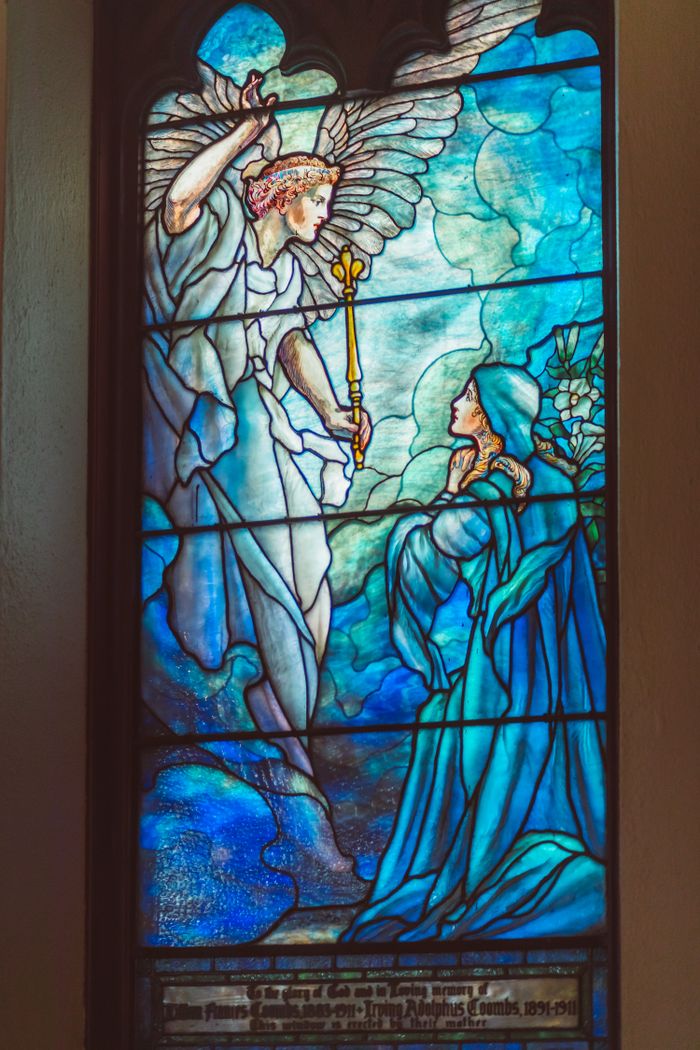
Imagine, even today, if an angel were to appear with a message that seemed risky or beyond our understanding—would our hearts be ready to accept it?
Mary’s yes to God made her a spiritual model of obedience and faith for generations and contributed to God’s plan of salvation for humanity.
A simple ‘yes’ may seem small, yet Mary’s yes had extraordinary significance.
By freely consenting to God’s will, she cooperated in the mystery of salvation and became the mother of the Savior.
The Magnitude of Mary's Yes
The Annunciation was not simply the moment when an angel brought Mary good news.
It was the moment when God placed before a young woman a calling that would change the history of salvation forever.
God did not force His will upon Mary.
He invited her to participate in His divine plan.
Mary was free to respond.
A ‘yes’ or a ‘no’ was Mary’s choice to make.
Her ‘yes’ had its own consequences.
In fact, weighing the immediate consequences, to say ‘no’ would be easier, and on receiving God’s message from the angel, if it were me, I would choose to say ‘no,’ rather than stress my ‘no’ to ‘no way.’
Thus we have Mary, truly an epitome of faith and obedience, to follow even today.
What happened…
At first, Mary was startled by the sudden appearance of God’s angel and the unexpected greeting that followed.
28 The angel went to her and said, “Greetings, you who are highly favored! The Lord is with you.”
29 Mary was greatly troubled at his words and wondered what kind of greeting this might be.
(Luke 1:28,29)
Mary was a young ordinary woman from Nazareth, a small, insignificant town with no great reputation at that time.
“Nazareth! Can anything good come from there?” (John 1:46)
Now for a heavenly messenger of God who addressed Mary as “highly favored” and “blessed among women” was deeply shocking and contrary to her humble view of herself.
During her times such salutations of praise were reserved for the men and surely not for a woman.
Also, the phrase “The Lord is with you” was normally spoken to great leaders and heroes like Moses, Gideon, and Joshua right before giving them difficult tasks.
Being humble and ordinary, Mary did not see herself as important or worthy of such grand attention.
The beginning was confusing, and more confusing was the message from the angel.
You will conceive and give birth to a son, and you are to call him Jesus. (Luke 1:31)
She could not see the road ahead. It made no sense.
She was still not married, a virgin, and her being pregnant meant being stoned to death if Joseph had to press charges of unfaithfulness during this period, as it would be treated as adultery.
She did not know how Joseph would respond to her ‘yes’ to God, how others would judge her, or what suffering would eventually come with being the mother of the Messiah.
She knew that accepting God’s will was right, but her state could expose her to shame, misunderstanding, and even serious consequences in the society in which she lived.
Mary’s faith and obedience outweighed the consequences.
Her faith was simple yet complete.
Like what her divine son would speak of in the future…
If you have faith as small as a mustard seed… (Matthew 17:20)
Mary did not bargain with God. She did not ask for guarantees or protection from shame and any trouble before surrendering.
Mary’s response reveals a profound faith: she trusted deeply the One who called her more than she feared the uncertainty that might lie ahead.
Her words, “Behold, I am the handmaid of the Lord; let it be to me according to your word” (Luke 1:38), are far more than words of agreement.
They are words of complete surrender.
At that sacred moment, ‘Mary’s Yes’ became an offering.
Her freedom, her future, her reputation, and her very body were placed at the service of God’s will.
And through that humble “yes,” she opened herself to become the mother of Jesus Christ.
In God’s plan of salvation and sending His only Son to bring man to be with God in eternity, we see the epitome of God’s love and longing for man.
And Mary’s ‘yes’ to participate in God’s plan, though its outcome was unknown to her, was an act of love for the human race and a small but vital role in eternal goodness for humanity.
Mary's Yes to God: Virtues of a Sacred Life
At the Cross, Jesus entrusted His mother to John, saying to Mary, “Behold, your son,” and to John, “Behold, your mother.”
In giving Mary to John, Jesus made John the son of Mary, signifying that humanity itself is now entrusted to her maternal care.
Just as children learn from their parents, we as disciples of Christ can learn valuable lessons from Mary, our spiritual mother.
- Faith
‘Mary’s yes’ is first a lesson of faith.
Faith in God as the creator of her life and this world.
Faith in the goodness of God.
Remember, unlike us mortal beings, there’s always good coming from God’s will. That is your faith in God.
- Trust
Mary accepted God’s call without having all the answers or knowing how the future would unfold.
This was an act of trust—resting in God’s will rather than relying on human reasoning or being swayed by doubts.
- Surrender
“Let it be done to me according to your word,
To declare, “I trust in God,” and to embrace His will requires both strength and perseverance.
Mary showed true spiritual humility rather than hesitation or negotiation.
- Courage
Mary didn’t doubt or negotiate with the angel for her own safety and well-being.
Her ‘yes’ symbolized courage, for in accepting God’s will she chose faith over the fear of the unknown.
- God’s Will
Mary’s ‘yes’ became an instrument of God’s will to come to completion.
She represented our human active participation in His plans.
Building a Life Around Mary's Yes to God: Lessons for a Great Christian Life
Mary’s ‘yes’ is not a historical artifact; it is a blueprint for the soul.
Here is how her posture inspires us today, along with practical steps to weave that same spirit into our daily life.
- Cultivating a Receptive Heart
Before Mary could say “yes,” she had to be capable of hearing the invitation.
Spiritual tradition holds that Mary was deeply rooted in prayer, which gave her the inner stillness required to recognize the presence and voice of God.
Modern life, by contrast, is saturated with digital noise, anxiety, and constant distraction, leaving little room for spiritual intuition.
- The Inspiration:
God’s invitations are rarely announced with theatrical thunder; they come as quiet nudges of grace.
We cannot say “yes” to a calling we are too busy to hear.
- Practical Step: Create a daily sanctuary of silence.
Make it a daily practice to spend 10–15 minutes in complete quiet, letting your heart rest in God’s presence.
Use this time simply to sit in God’s presence.
Begin by saying, “Speak, Lord, for your servant is listening,” and allow your soul to settle.
- Surrendering the Illusion of Control
When the angel Gabriel delivered the message, Mary asked a practical question (“How can this be?”), but she did not demand a step-by-step business plan before committing.
Today, we often suffer from spiritual paralysis, refusing to step into a vocation, a relationship, or a ministry until we are guaranteed a painless, successful outcome.
- The Inspiration:
True faith is taking the next right step in the dark.
Mary teaches us that we do not need to understand the whole journey to trust the Guide.
- Practical Step:
Practice the “Morning Offering.”
As soon as you wake up, hand the day over to God.
You can pray a simple, modern fiat: “Lord, I give you my plans, my anxieties, and my desires for today. Let it be done to me according to your will.”
When unexpected disruptions or frustrations arise, actively recall this morning prayer to remain grounded.
- Having the Courage to Face Misunderstanding
Mary’s “yes” carried immense worldly risk.
As an unwed mother in first-century Judea, she faced public disgrace, the loss of her betrothed, Joseph, and even the threat of death by stoning.
Her “yes” to God was an act of trust, choosing His will above the comfort of societal approval.
- The Inspiration:
Following a spiritual path in the modern world often invites misunderstanding, mockery, or loss of status.
Mary’s courage reminds us that divine alignment is infinitely more valuable than human validation and response.
- Practical Step:
Sometimes choice should come from conviction, not convenience.
This could mean speaking up for someone being gossiped about, refusing to participate in an unethical shortcut at work, or forgiving someone when culture tells you to hold a grudge.
Let your “yes” cost you something.
- Becoming a Vessel for the Incarnation
Through Mary’s consent, the Word became flesh; the divine entered the physical world.
While Mary’s role is unique, every spiritual seeker is called to a similar dynamic: we are asked to let grace take on flesh in our own lives, families, and communities.
- The Inspiration:
God prefers to work through human cooperation.
Your “yes” is the channel through which peace, justice, and love enter our immediate environment.
- Practical Step:
For even the Son of Man came not to be served but to serve others and to give his life as a ransom for many.”
(Matthew 20:28)
We are to live in harmony, loving and serving our fellow beings.
When you serve others, your actions become a true offering of dedication and sacrifice to God.
Do it with immense love and patience, internally offering it up as a prayer for someone else who is struggling.
This turns routine duty into a spiritual “yes.”
Mary’s ‘yes’ to God is a lifelong journey where that ‘yes’ happens every day as a daily commitment.
The angel is disguised in the goodness and the voice of God that is heard by your spiritual being, conscience, and inner prompting.
Adhere to it, living a life as a son who followed the footsteps of his mother, Mary.
Jesus is the ultimate model, but Mary is viewed as the first and perfect disciple.
Following her footsteps means emulating her humility, obedience, and trust in God.
Like Mary’s “yes” to God, choose to say “yes” to a life in Christ that bears spiritual fruit and blessings.